


More Than 435,000 Tourists Enter Bali During Idul Fitri Holidays
Hundreds of thousands of tourists have come to Bali as Indonesians enjoy a long Idul Fitri holidays this week.
news

Hundreds of thousands of tourists have come to Bali as Indonesians enjoy a long Idul Fitri holidays this week.
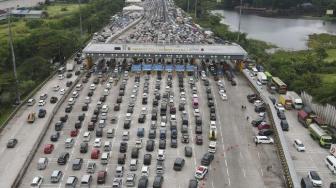
The state-controlled toll road service, Jasa Marga, noted that 1.7 million vehicles left the Greater Jakarta for the Homecoming Mudik tradition.

Members of the public started filling up the mosque at 4.00 a.m.

An economist has claimed that the recent Ramadan and Idul Fitri holidays have triggered economic growth in the more remote areas across Indonesia as well as increasing consumer purchasing power as millions of workers received religious holiday allowance, or THR.
Economist from the Maritime University of Raja Ali Haji in Riau Islands Dody Dermawan said that the long public holidays have created positive impacts to local economy as economic activities and consumptions significantly increased during the period.
“All business sectors like service, transportation, tourism, handicraft, fast food, clothing, and food gain benefits since the government eases the social restrictions since the fasting month up to now,” Dermawan said on Tuesday, May 10, as reported by Antara.
In addition to that, the number of money in circulation also increases, including since the majority of workers in Indonesia receive allowance for religious holidays.
“The increasing purchasing power is also affected by the situation in the previous two years where Indonesians couldn’t celebrate Idul Fitri as freely as this year, and they were able to save money,” the expert explained.
More particularly, Dermawan also highlighted the urbanization trend post-Lebaran since many companies in big cities are looking for a big number of manpower.
However, he said migration to Riau Islands is less likely to happen because the majority of industries in Batam and Bintan are still recovering after being badly hit by the COVID-19 pandemic.
“Even if urbanization takes place, it’s most likely to be from villages to cities due to local government’s regulation that encourages companies to employ people located nearby the companies’ locations,” the economist predicted.


